
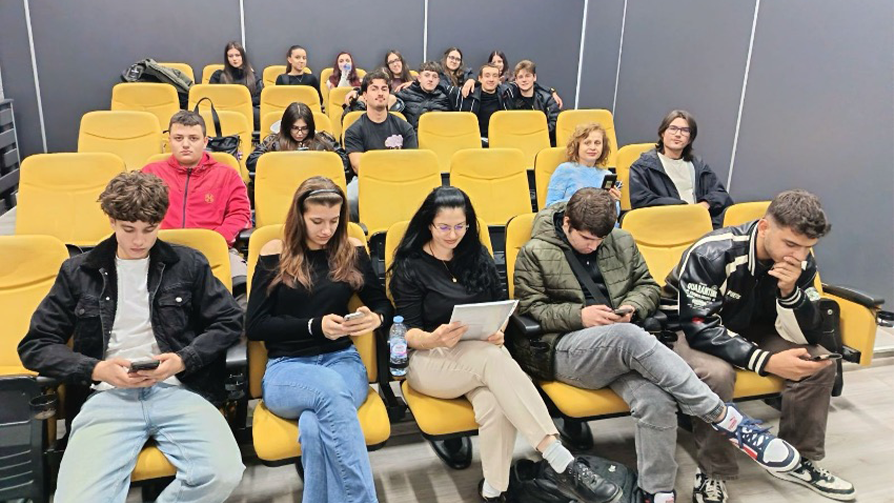
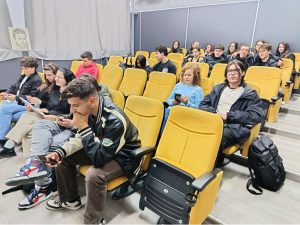
On 27 October, it was the turn of Hristo Botev Vocational School of Interior Architecture and Woodworking, the Bulgarian partner of the ECOIn.Lub Erasmus+ project, to deliver the 6th ECOIn.Lub International Webinar. The session demonstrated how something as ordinary as school waste can inspire design, foster student creativity, and promote circular economy thinking.
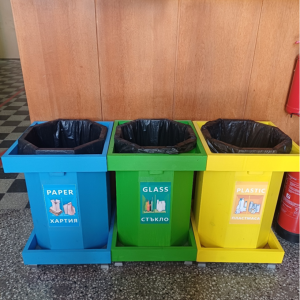
The presentation began with an introduction to the school’s waste-sorting system. The bins were designed and built by students together with ten trainees from a Finnish VET centre who visited the school in October 2025 through the MOSAIC mobility project, in partnership with the University of Forestry in Sofia. Students from the Polygraphy programme also designed information boards explaining which materials should be placed in the blue (paper), green (glass), yellow (plastic and metal), and grey (general waste) containers. These boards are now displayed throughout the school.
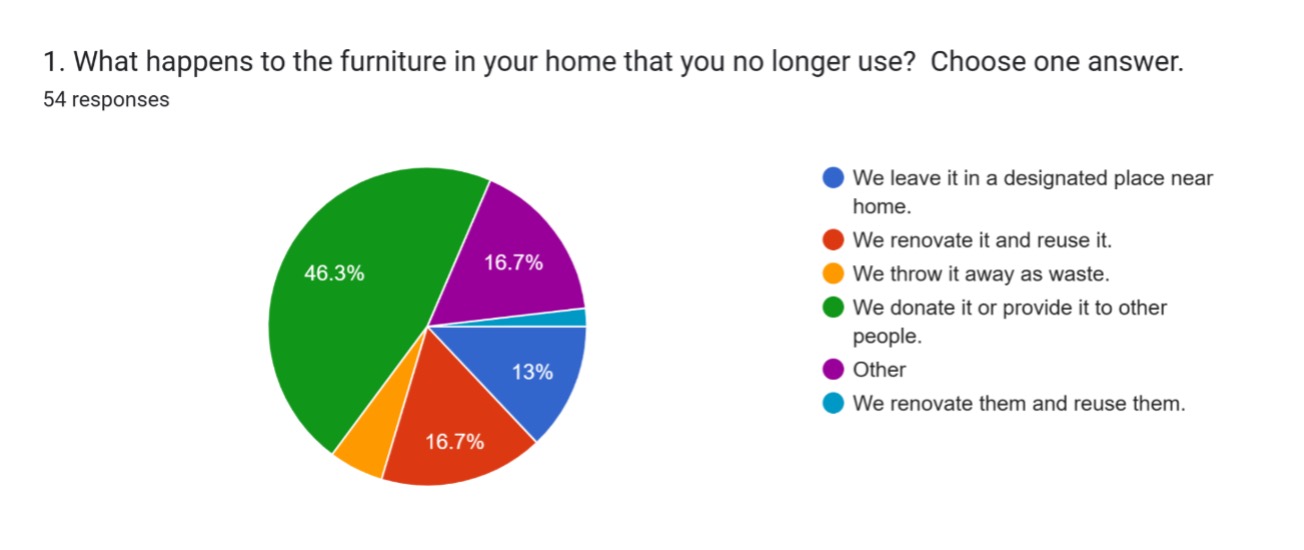
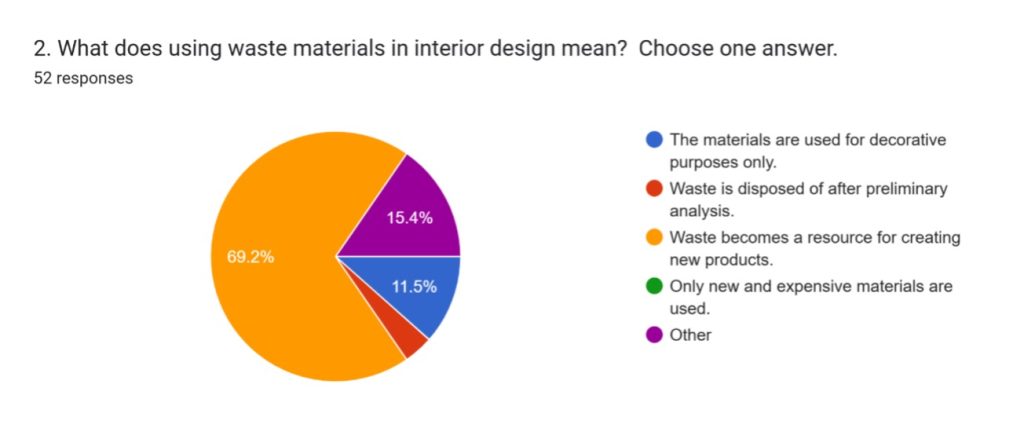
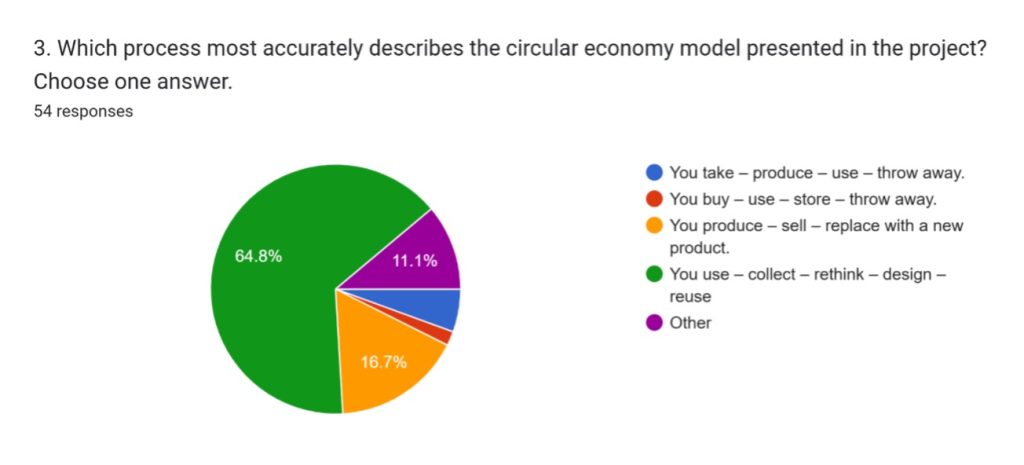
Participants also took part in a short three-question survey involving students from the four ECOIn.Lub partner schools in Bulgaria, Portugal, Türkiye, and Finland. The results revealed encouraging levels of awareness regarding circular economy concepts and sustainable furniture design. While 46.3% of respondents indicated that unwanted furniture is donated or passed on to others, nearly seven in ten students (69.2%) recognised that waste materials can be used as valuable resources for creating new products. In addition, 64.8% correctly identified the project’s circular economy model as “use, collect, rethink, design, reuse”. These findings demonstrated that the project’s key messages are being successfully understood and shared among students across the partner countries.
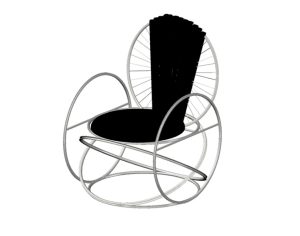
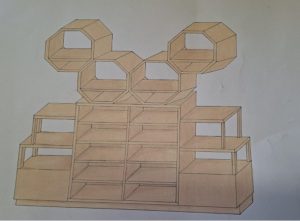
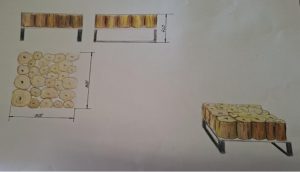
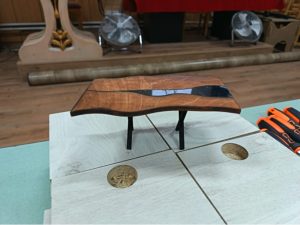
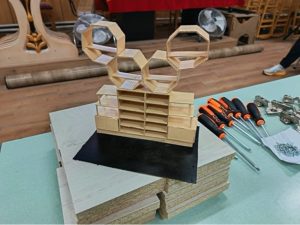
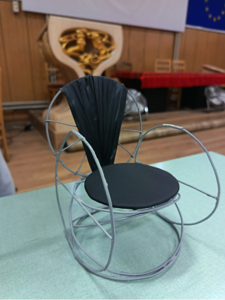
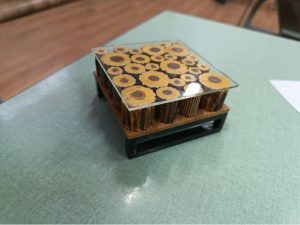
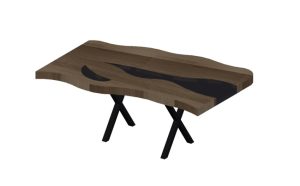
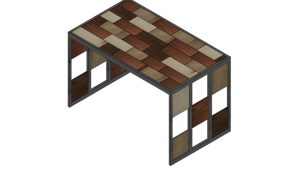
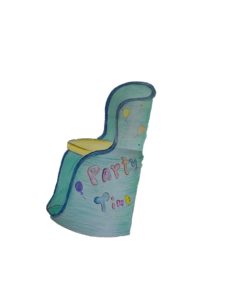
The presentation then moved on to the school’s annual Interior Architecture Day, held in May. On this occasion, students were challenged to design and create furniture using waste materials as their primary resource, following a complete design process that included material analysis, concept development, sketching, engineering design, and the production of a physical mock-up.
The central message of the webinar was the transition from a linear model of consumption (take, produce, use, and dispose) to a circular one (use, collect, rethink, design, and reuse). Students are encouraged to consider the life cycle of objects, develop solutions with limited resources, collaborate effectively in teams, and transform challenges into design opportunities.
The school’s approach is built on three interconnected levels: separate waste collection as a source of materials, design from waste as a creative challenge, and circular thinking as a broader educational objective. The next step will be the creation of a school materials bank, where leftover materials from practical furniture production training will be collected, sorted, and stored for future projects.
The webinar concluded with the message that the circular economy begins at school and that sustainability can become a project, a design process, and a tangible product rather than simply a topic found in textbooks.
Comments are closed